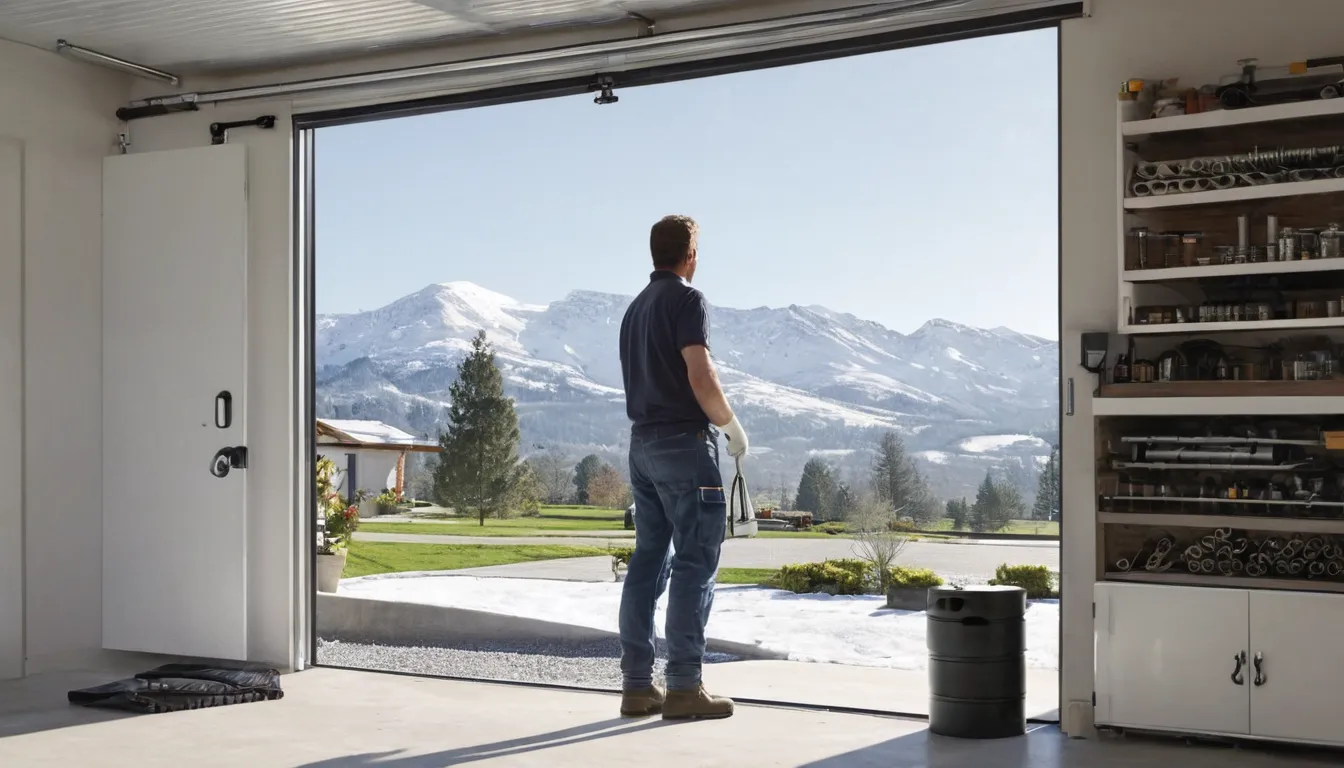
A broken garage door spring is a frequent reason a door suddenly won't open. The spring carries the weight of the door. When it fails, the door feels heavy, drops fast, or stays shut. The part also holds a lot of stored force, so this is a job for a trained pro.
Comparisonincreasingly Garage Doors is a referral service. We connect you with independent local providers in the Castle Pines area who handle spring work. This page explains the signs of a bad spring, what you can safely do, what drives the price, and what to ask before you agree. Request an estimate, compare written quotes, and decide with a clear picture.
Heard a loud bang? Stop here first
A sharp snap from the garage often means a spring let go. The door may now feel stuck or very heavy. Do not try to lift it. Do not pull the release cord while the door is partly open. A spring under tension can cause a serious injury.
Keep kids and pets away from the door. If your car is inside, leave it for now. Then choose your next step.
Request Help
Safe jobs, pro jobs
Some tasks are fine for a homeowner. Others are not. Here is the split, so you spend your time and money in the right places.
What you can safely do
- Look at the door from a distance. Do not touch the springs, cables or brackets.
- Check that the opener is plugged in and the remote battery works.
- Wipe dust off the small sensor eyes near the floor.
- Take photos and notes. They help a provider quote the job and help with a claim.
- Write down the door size and material if you know them.
What belongs to a pro
Anything that touches spring tension. That means winding, unwinding, removing or swapping a spring. It also covers the cables and drums tied to it. Pros use fitted winding bars and know how to match a spring to your door.
Signs a spring has failed
- A bang from the garage, then a door that will not rise.
- A visible gap in the coil above the door or along the side tracks.
- Loose or drooping cables.
- A door that sits crooked or hangs lower on one side.
- An opener that hums or strains but barely moves the door.
One sign may be enough. Do not test the door to be sure.
Torsion or extension: which do you have?
A torsion spring is a thick coil on a metal bar above the door. An extension spring is a long, thinner spring that runs along each side of the door. Both store force. Both are pro jobs.
Torsion setups are common on heavier or newer doors. Extension setups are often found on lighter, older ones. Knowing which you have helps you read a quote.
Why spring work is a pro job
A wound spring holds the force needed to lift your whole door. If a tool slips, that force goes somewhere fast. Pros also size the spring to the real door weight. A spring that is too weak or too strong leaves the door unbalanced and wears out the opener.
A store-bought spring may look right and still be wrong. That is why the saved money from a DIY try can vanish quickly.
Check the spring before you buy a new garage door opener
A dead spring makes a healthy opener look broken. Many homeowners start shopping for a new garage door opener when the real problem is the spring. Ask the provider to test the door balance first. If the opener is fine, you keep that money.
Track alignment matters too
A door that rubs, jerks or hangs may have bent or loose tracks. During a spring visit, many providers also look at track alignment and worn rollers. Out-of-line tracks add strain, and strain can shorten the life of a new spring.
What a spring visit usually includes
- A look at the door, springs, cables, drums and rollers.
- Spring size matched to door weight.
- Removal of the broken spring and fitting of the new one. Torsion springs are often swapped as a pair.
- A check of the cables, brackets and track alignment.
- Lubricating moving parts.
- A balance test and an opener safety-reverse test.
- A written explanation of any warranty terms.
Standard or high-cycle springs
A cycle is one open and one close. Standard springs are often rated for around 10,000 cycles. High-cycle springs are rated higher. If your family opens the door four times a day, that is about 1,460 cycles a year. A standard spring could then last roughly seven years.
High-cycle springs cost more up front. They can save you a repeat visit. That is the trade-off to weigh.
Know the cost drivers
Price moves with spring type, door weight, cycle rating, and whether cables or rollers need work. Extra fees may apply for evening or weekend visits. Get the quote in writing and compare at least two.
Request Help
How weather wears on springs
Springs wear with every cycle, and climate adds to it. Heavy snow and ice can add weight to a door. Fast spring melt can leave a wood door damp and heavier. Hail can dent panels and shift the balance. Strong sun and dry air can dry out lubricant. A yearly visual check from a safe distance helps you catch trouble early.
Emergency garage service when the car is stuck
If you need to get out today, ask whether a provider offers emergency garage service. Availability varies by provider and by day. Request a callback to check provider availability, and ask about any added fee before you agree.
Request Help
Questions to ask before you say yes
- Is the spring torsion or extension, and why?
- What is the cycle rating?
- Does the price include cables, rollers and track alignment checks?
- Are there extra fees for the time of the visit?
- What does the warranty cover, in writing?
- Will you test the door balance and safety reverse afterward?
What's Included
Spring and balance check
A provider checks the spring, cables and drums, then tests how evenly the door lifts and lowers.
Matched replacement springs
Springs are sized to your door weight, so lifting feels smooth and even.
Track alignment review
Tracks and rollers get a look, since crooked tracks add strain to new springs.
Opener safety test
Many visits end with a safety-reverse test so the opener stops when it should.
What drives spring repair prices
These are typical U.S. ranges. They vary by door weight, spring type, cycle rating and visit timing. Treat them as a starting point, then compare written quotes from more than one provider.
| Item | Typical range | Notes |
|---|
| Extension spring pair | $150 – $350 | Often paired with safety cables |
| Single torsion spring | $200 – $450 | Standard cycle rating |
| Torsion spring pair | $250 – $600 | Many pros replace both together |
| High-cycle spring upgrade | $350 – $850 | Costs more now, lasts longer |
| Cable or drum replacement | $100 – $300 | Added when worn or frayed |
| Track alignment or roller work | $100 – $300 | Depends on how bent or worn |
Request Help
How It Works
Stay clear, snap photos
Keep the door alone, move people and pets back, and take a few photos of the springs and cables.
Request an estimate
Tell us what you heard and saw, and your door type if you know it.
Talk with a provider
A local provider in our network follows up, asks questions and explains the work.
Compare, then decide
Review written quotes, ask about warranty terms, and pick the one that fits.
Why Call Comparisonincreasingly Garage Doors
Start with a clear picture
Learn the signs and cost drivers before you talk to anyone about price.
Fewer calls
Reach an independent local provider through one request instead of searching and phoning around.
Quote before commitment
Compare written quotes so you see what is included and what is extra.
Honest limits
We tell you which tasks are safe at home and which need a pro.
Other Services